Social Contributions
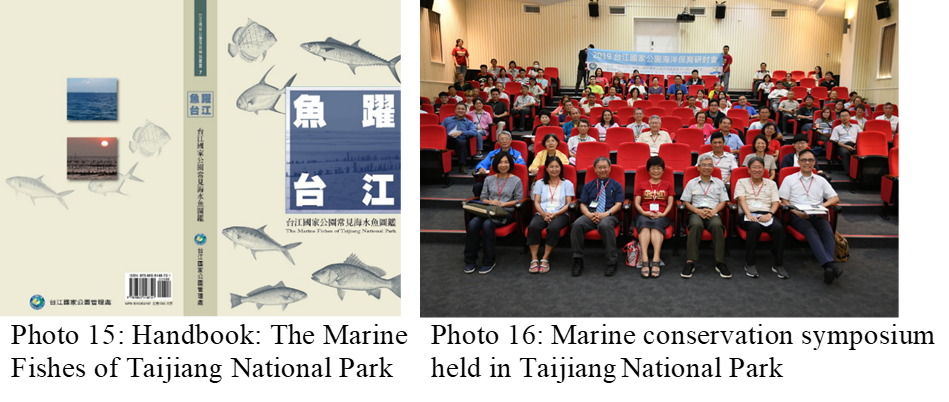
The team promotes science and public education and empowers activities for primary and high school students. The team energizes social media and all activities. Not only that education in the above schools, but our education also extends to our society. For example, the team has guided marine micro-courses and teaching, educating female scientists and high school teachers. To elevate consensus on marine conservation, the team shows teachers who work for ASEP (Asian Student Exchange Program). The group serves as a thesis guide in the cross-school camps and Top Quality High-School Courses Promotion program. Through this comprehensive marine educational guide work, the team goals to incubate talents for marine science (SDG4, SDG13).
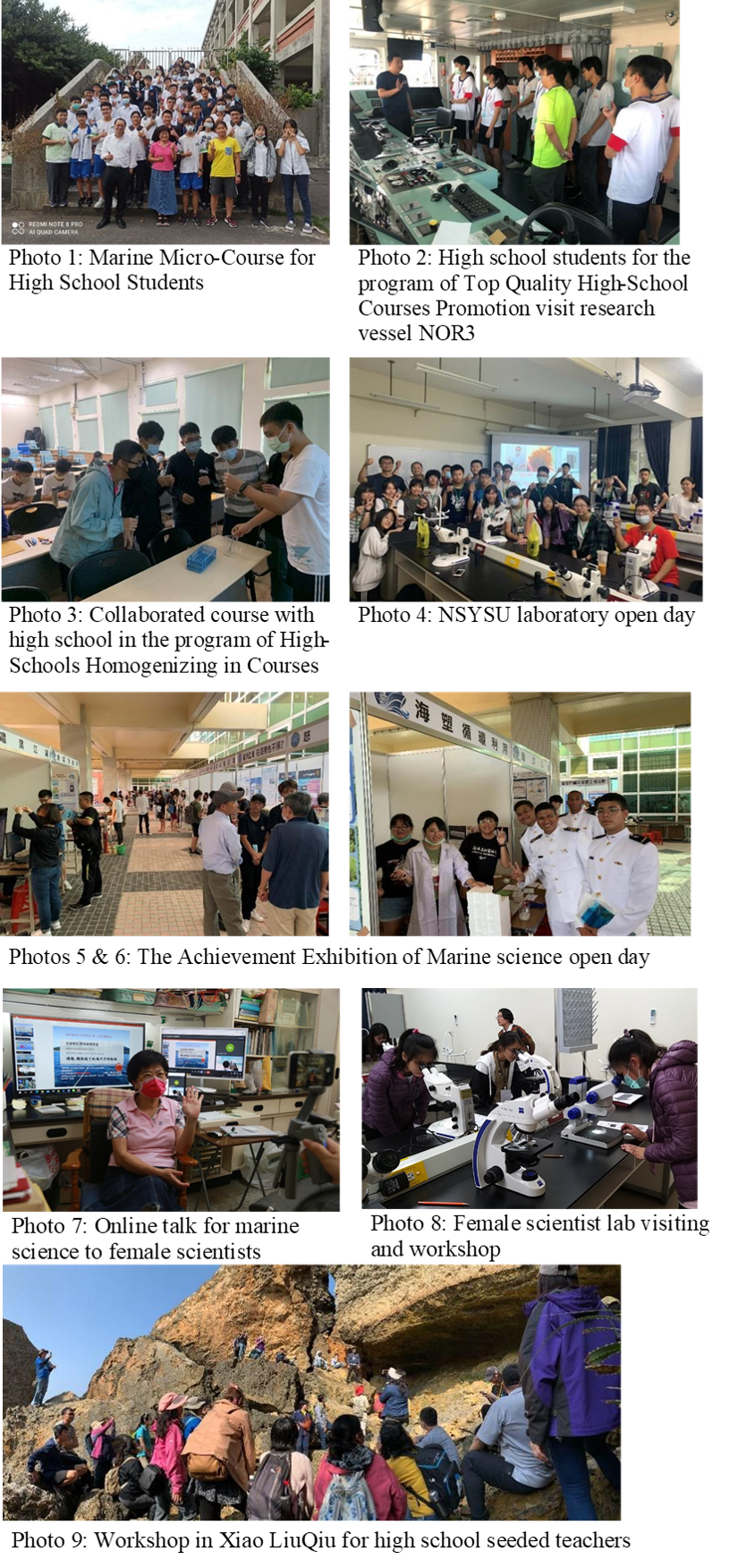
The research by this team supported government policy in formulating climate change-based management plans for distinct areas. Taking Xiaoliuqiu (XLQ) as an example, the island blooms in the tourism industry due to its abundant ocean resources and rich biodiversity. However, overwhelming tourists dramatically forces the ecosystem. Excess anthropogenic interference, habitat degradation, and extreme weather led to an abrupt decrease in biodiversity, with intertidal zones most affected. Our members have been entrusted by the Pingtung County Government to conduct ecological surveys and to provide management advice since 2019. Apart from assisting the Pingtung County Government in establishing regulations, our members are also involved in restoring giant clams in the intertidal zone, offering eco-tour guides to interact with the tourists. In XLQ, tourists could “get close to the sea” while “learning marine organisms and the ecosystem by “A guidebook on the introduction of Xiaoliuqiu intertidal benthic organisms” (SDG4, SDG13, SDG14, SDG17).
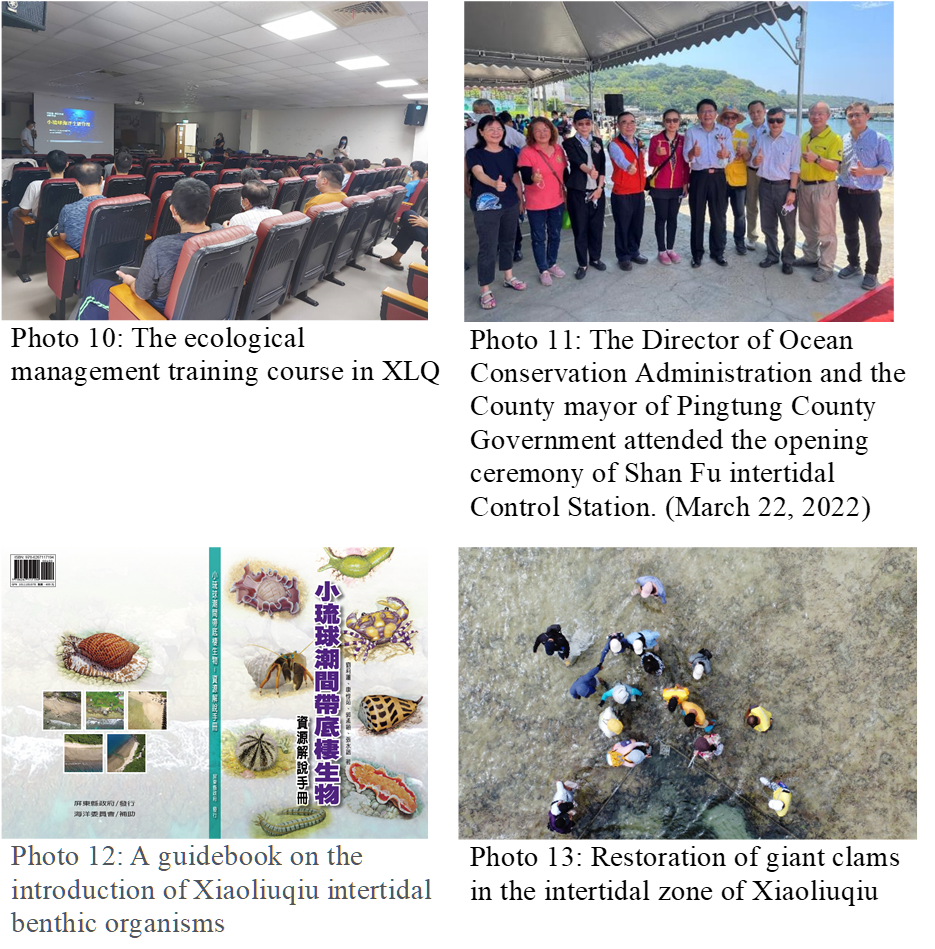
The College of Marine Sciences, NSYSU, cooperated with Kaohsiung City Animal Protection Office to publish a handbook entitled ”Prevention and Control of Aquaculture Infectious Diseases in Kaohsiung City.” With the integration of NSYSU’s disease research effort and the experience of local fishermen, the handbook can help the fishermen reduce economic loss and raise productivity (SDG4, SDG13, SDG14, SDG17).
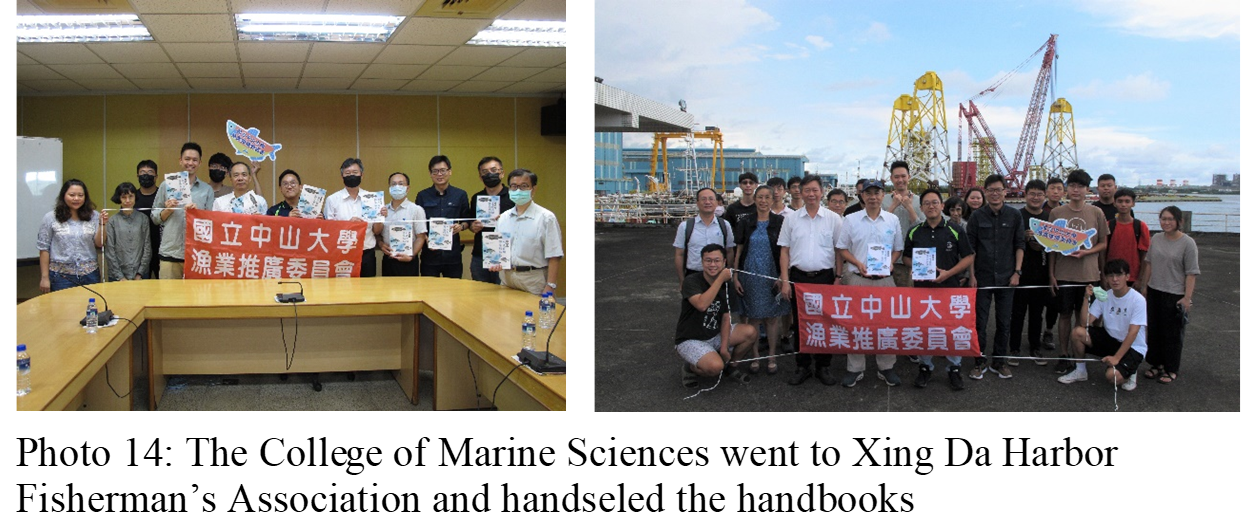
Aiming to assist Taijiang National Park in obtaining the baseline data, our members investigated the biodiversity in areas between the Yanshuei River in Tainan and the southern Dong Ji Island in Penghu, commonly known as the dark water trench. The book “The marine fishes of Taijiang National Park” was published based on fish biodiversity survey data. Furthermore, a Taijiang National Park and marine conservation symposium were held in 2019 to enhance the public’s participation and understanding of the biodiversity of Taijiang (SDG4, SDG13, SDG14, SDG17).